
The Poppy: From Forgetfulness to Remembrance
Written by David Caldwell ·
How a flower of sleep, blood, fashion, and empire became a memorial emblem before the modern era
The red poppy did not begin life as a clean, fixed symbol of remembrance.
It arrived there through contradiction.
Before the First World War, the poppy already carried several meanings at once: sleep, pain relief, forgetfulness, blood, beauty, vanity, theatrical ornament, and the uneasy glamour of war. By the 1910s and early 1920s, those meanings did not disappear. They were absorbed, argued over, and recast.
If we stop before later twentieth-century politics, the story is clearer. It shows symbol-making in real time, through poems, fashion notes, charity events, battlefield reportage, and ordinary people trying to make grief visible.
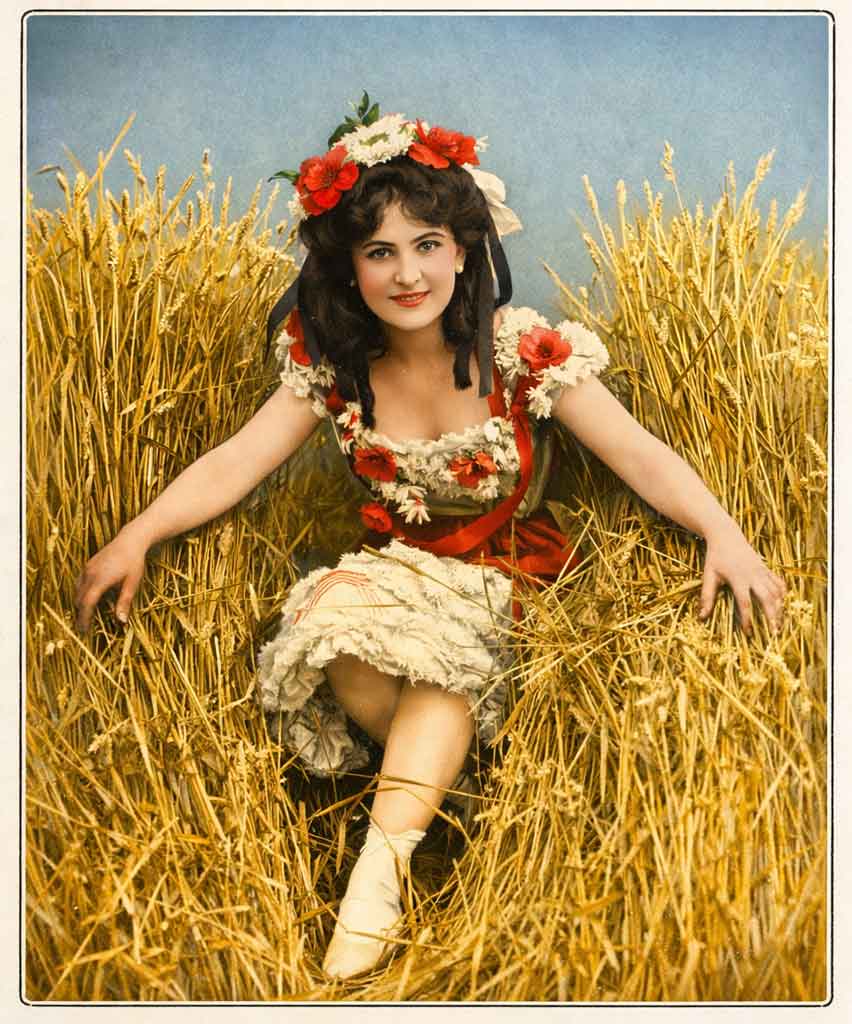
La Belle Poppy
1) Sleep, sedation, and the moral split
Long before lapel poppies and national appeals, British newspapers linked the flower with sleep and oblivion.
In “Sorrow’s Address to the Poppy” (Northampton Mercury, 8 May 1824), the flower is addressed as comfort in distress:
“To thee, red poppy, now I pay
A willing bosom’s tribute…”
The poem goes on to praise the poppy’s power to dull pain, calm the mind, and bring dreamlike relief. This is not yet remembrance language. It is anaesthetic language.
That softer register sits beside a much harder imperial one. A report in the True Sun (10 Aug 1836) remarks on British cultivation of poppy in Indian territories for the China opium trade. The economic chain is laid out bluntly: one commodity system feeding another. By 1880, in the poem “Opium” (Dundee Evening Telegraph, 29 Mar 1880), the moral indictment is explicit, with poppy wealth described as poison, blood-money, and national shame disguised as trade.
Even popular press fiction keeps this link alive. In “The Poppy’s Victims” (Leicester Chronicle, 15 Oct 1898), opium use is presented as both personal ruin and social warning.
So at the start of the nineteenth-century record, the poppy is already double: relief and damage, sleep and exploitation, mercy and empire.
2) Classical roots: Virgil, Byron, and the war-flower image
The poppy as a war image does not begin in 1914. It has a deep literary ancestry.
In Virgil’s Aeneid (Book IX), the death of Euryalus is figured through a falling flower image that later English readers repeatedly associated with the poppy: beautiful, young, abruptly cut down. That classical image passes into Romantic culture, including Byron’s reworking of the Nisus and Euryalus episode.
Byron also becomes central to later war reading through Waterloo. His famous line:
“How that red rain hath made the harvest grow!”
was repeatedly recalled in wartime commentary, including the 1917 piece discussed below. The power of that line lies in its double vision: blood and harvest, violence and renewal, horror and fertility in the same field.
This is exactly the symbolic terrain the poppy would later occupy.
3) Before 1914: battlefield aftermath and blood-lore
There is strong pre-WWI evidence linking poppies to the aftermath of war.
In the anonymous ode “The Field of Waterloo” printed in 1816 newspapers, one stanza gives the line:
“And gaudy poppies seem to mock the dead…”
This is not a badge of duty. It is a bitter image, bright flowers above slaughter, beauty that feels indecent.
At the same time, newspapers also recorded how quickly battlefields could be folded back into agriculture. The Public Ledger and Daily Advertiser (1 Dec 1823) noted that Waterloo no longer bore obvious marks of carnage, with abundant corn crops and ploughed land. A similar tone appears in “Solferino After the Battle” (Bedfordshire Times and Independent, 16 Jul 1859), where terrain, debris, and cultivation are described together, as if history and husbandry were forced into the same soil.
Alongside reportage ran folklore. In the North British Agriculturist (10 Jul 1889), readers are told both that poppies belonged to old Ceres imagery and that red poppies at Waterloo were believed to spring from the blood of the slain. The Stalybridge Reporter (2 May 1891), in “Superstitions of Bloodstains,” repeats the same belief. Whether botanically true is not the point. The point is cultural memory: people were already reading battlefield poppies as blood-signs long before Flanders entered public ritual.
A later piece, “The Poppy and War” (Framlingham Weekly News, 11 Dec 1937), looks back to earlier battles such as Landen and repeats this older logic of soil, corpses, and poppy eruption. Though later than this article’s main time frame, it confirms how persistent the older tradition remained.
4) The poppy in fashion, theatre, and song before remembrance culture
Before it became solemn, the poppy was everywhere in decorative and entertainment culture.
Fashion reports in the early nineteenth century pair poppies and cornflowers repeatedly.
- Kentish Gazette (2 Sept 1800), Paris fashion notes.
- Sun (London) (26 Feb 1833), court dress with bouquets of poppies and cornflowers.
- London Evening Standard (26 May 1840), similar floral pairing in elite costume.
In theatre criticism of Drury Lane’s Joan of Arc (Morning Advertiser, 1 Dec 1837), the chorus includes:
“Ere the purple cornflower,
Faded in our vallies lie;
Ere the autumn poppy leaves
Clothe with gorelike spots the plain…”
Here cornflower and poppy are already coupled in a patriotic war register: colour, blood, nation, sacrifice.
Language itself reflected this visual culture. “Blush like a poppy” appears as a phrase in the Leicester Chronicle (9 Aug 1845), showing how strongly redness, emotion, and the flower were linked in common expression.
Music and concert culture add another pre-WWI layer.
- West London Observer (14 Dec 1861): a performer sings repeatedly of red poppies in a volunteer concert setting.
- Gloucestershire Echo (27 Apr 1889): programme items by “The Little Red Poppies.”
- Shields Daily News (1 Sept 1904): Dan Leno’s well-known “Red Poppies” song performed via gramophone demonstration.
- Bridlington and Quay Gazette (25 Aug 1911): “The Popular Poppies” in pierrot entertainment.
This matters because it proves there was not one single “Red Poppies” origin song. There were several strands: comic, concert, patriotic, and later martial.
5) Boer War fundraising theatricals and the poppy on stage
One of the most important pre-1914 threads is the fundraising masque tradition.
In February 1900, multiple newspapers described “The Masque of War and Peace” linked to high-profile charitable events for military causes. Accounts in The Sketch, Ladies’ Field, and the Daily Telegraph & Courier describe allegorical costuming in detail:
- War in blood-red drapery and helmet,
- Peace in white,
- and wreaths containing red poppies, often alongside cornflowers, daisies, and wheat motifs.
The poppy in this setting is not yet the standard remembrance badge. It is symbolic material inside imperial charity spectacle, patriotic pageantry, and court society theatre.
The same performance culture continued into WWI fundraising. A report in the Daily Record (28 Apr 1915) on a Drury Lane matinee for the American Women’s War Hospital at Paignton again references a war-and-peace programme associated with Lady Paget’s organising circle.
This continuity is significant. It shows that by the time Flanders imagery took hold, the public was already accustomed to poppies appearing in militarised charity display.
6) Flower Monday, continental custom, and the cornflower-poppy field
The poppy did not develop in isolation. It often travelled with the cornflower.
A striking pre-WWI clue appears in “Flower Monday” reporting from Walsall Observer (20 Jul 1895), describing a French custom around the first Monday after 14 July, where “Poppy Day” language is used in a festive and charitable setting. This suggests that flower-based public collecting had continental precedents before the British post-1918 system took shape.
Later evidence makes the French cornflower link explicit. A Leeds Mercury piece (10 Nov 1939) explains “Bleuet” as cornflower and presents cornflower and poppy together as an Anglo-French veterans’ gesture. That is outside this article’s core period, but it helps decode earlier pairings in costume, poetry, and ceremony.
So historically, this is not one flower replacing another. It is a shared symbolic field with different national emphases.
7) 1915-1919: from many poppies to one dominant image
During WWI, the symbol intensifies but remains unsettled.
Local “Poppy Day” activity appears in press references tied to practical relief: hospitals, comfort funds, prisoners of war, and municipal collections. Artificial flowers were sold through varied local networks, including volunteer groups and later disabled ex-servicemen production schemes.
Then comes the decisive literary surge. In late 1918, British papers printed John McCrae’s “In Flanders Fields”:
“In Flanders fields the poppies blow
Between the crosses, row on row…”
Response poems followed, including “To Those Who Sleep in Flanders Fields” (1919), extending the rhetoric of duty and continuity.
At the same time, older meanings still resisted closure. In “War’s Untidiness” (Civil & Military Gazette, Lahore, 13 Sept 1917), the writer describes wrecked terrain and remarks that only one weed should be “accursed,” the flaring poppy, because it “typifies forgetfulness.” Yet the same article then admits that the poppy lends needed life and colour to a dead landscape. That contradiction captures the exact transition underway: a flower of forgetting being repurposed for remembrance.
Another key wartime voice is Major W. Campbell Galbraith. In “Red Poppies in the Corn” (circulated in 1916 newspapers), he writes both pastoral beauty and battlefield violence into one lyric. He sees poppies in evening fields, then “dyed a deeper hue” over trench lines and graves. Galbraith is a bridge figure: military-authored, war-shaped, but still speaking through older rural and poetic imagery.
8) Private mourning: flowers from trench seed
Not all remembrance was institutional. Some of it was domestic and intensely personal.
A London report in 1919 described a father wearing poppies grown from seeds sent back from the Ypres front by his son. This is one of the most telling micro-histories in the archive. It joins battlefield and home garden, public symbol and private grief, botany and bereavement.
This is how symbols harden: not only by committees and campaigns, but by families making rituals that feel bearable.
9) Early 1920s: debate, production, and authenticity
In the early 1920s, the poppy is still being negotiated.
The Daily Mirror (10 Oct 1921) carried criticism of using the Flanders poppy as the symbolic flower of remembrance, with one correspondent preferring a white chrysanthemum and others emphasising Armistice silence and Cenotaph practice. This is useful evidence that consensus was not automatic.
By the mid-1920s, production and branding become central. Appeals reference artificial poppies sold for ex-servicemen’s welfare, and concerns emerge about control of proceeds. A Manchester Evening News item (9 Oct 1926) warns against unofficial flowers and states that genuine poppies bore “Haig’s Fund” markings.
At almost the same moment, reflective commentary still appeared, such as Hunts County News (5 Aug 1926), describing poppies in Belgian graveyards and older local beliefs that heavy poppy bloom could foretell war. The older omen-language had not vanished. It was being pulled inside a new memorial economy.
10) What changed, what endured
By the mid-1920s, the shift is clear: in British public life, the poppy has become primarily a memorial token.
But it did not arrive as a blank sign. Beneath the remembrance poppy sit older strata:
- sleep and sedation,
- oblivion and forgetting,
- blood and battlefield folklore,
- imperial opium economies,
- fashion and theatrical ornament,
- fundraising performance culture,
- local wartime charity improvisation,
- private household grief.
That layered history explains its durability. The symbol worked because people already recognised parts of it, even when they disagreed on what it should mean.
Conclusion
The sharpest line in this archive may still be the 1917 complaint that the poppy “typifies forgetfulness.”
In hindsight, that is the turning point.
The modern memorial poppy did not emerge because earlier meanings were erased. It emerged because a grieving society reversed them. A flower linked to sleep and oblivion was made to carry memory. A bright bloom once read as mockery over graves was given a new burden: keep the dead present.
That transformation happened before the later political battles. It happened in poems, theatre programmes, provincial reports, fundraising tables, newspaper arguments, cinema titles, and lapels, between the nineteenth century and the 1920s.
Primary newspaper material used here includes: Northampton Mercury (1824), True Sun (1836), Morning Advertiser (1837), Leicester Chronicle (1816, 1845, 1898), Public Ledger (1823), Bedfordshire Times (1859), West London Observer (1861), North British Agriculturist (1889), Walsall Observer (1895), Stalybridge Reporter (1891), The Sketch / Ladies’ Field / Daily Telegraph & Courier (1900), Shields Daily News (1904), Bridlington and Quay Gazette (1911), Daily Record (1915), Civil & Military Gazette (1917), Western Morning News (1918), Irvine Herald and related 1918-1919 Flanders poems, Daily Mirror (1921), Manchester Evening News (1926), Hunts County News (1926), with later echo references in 1937 and 1939 for continuity of motif.
This Topic
Festival Lore and the Ritual Year
Seasonal customs, feast days, holy tides, weather lore, and the old calendar that still haunts the modern year.
View Topic PageMore in this Topic
27 March 2026
Hot Cross Buns: History, Origins & Folklore30 December 2025
The Wheel of the Year, Rebuilt from Evidence20 December 2025
The Curious History and Folklore of the Mince PieLatest Posts
27 March 2026
Hot Cross Buns: History, Origins & FolkloreDiscover the fascinating history of hot cross buns - from pagan offerings and Greek sacred bread to Chelsea bun houses and Good Friday folklore. Explore 2,000 years of spiced bread tradition.
22 March 2026
What Does "Ne'er Cast a Clout Till May Be Out" Actually Mean?Is it about the month of May or the hawthorn flower? And what on earth is a clout? We dig into 170 years of British newspapers to finally answer one of folklore's most argued questions.
20 March 2026
The White Hart: The Ancient Legend Behind Britain's Most Common Pub SignFrom Greek mythology to medieval forest law, the white deer haunted the British imagination for centuries. Discover the real history behind the legend of the White Hart — royal badge, supernatural omen, and elusive quarry of the soul.
13 March 2026
Why Is a Horseshoe Lucky? The Surprising History Behind the World's Most Universal CharmThe horseshoe has been nailed above cottage doors, cathedral gates, and battleship masts for centuries. Discover the ancient beliefs in iron, the crescent moon, and the sacred horse that made it the world's most enduring good luck symbol.
12 March 2026
Saint Piran of CornwallPiran - patron saint of Cornwall, tin miners and the Cornish flag — from Irish origins to the buried oratory's remarkable 2014 excavation.
10 March 2026
Clare Island - Isle of Storms, Pirates and Naturalists: A History in Newspaper Voicesiscover the fascinating history of Clare Island, off the coast of Mayo - from the piratical legend of Grace O'Malley and bitter land disputes to a landmark natural history survey, told through contemporary newspaper voices spanning 1863 to 1986.